Showing posts with label geology. Show all posts

Sunday, December 22, 2024

Jurassic Coast - Sidmouth

I left Exmouth along the South West Coast Path, a long-distance trail spanning the southwest of England. The Jurassic Coast makes up a portion of this path. As I passed the holiday resort in Sandy Bay, I had my first striking view of the ochre-coloured cliffs rising sharply from the sea. This was the type of coastline I travelled all the way to Sidmouth.

To explain how these cliffs formed, I need to wind back the clock a few million years when the continents were joined together in a single supercontinent called Pangaea, and Britain was in the centre landlocked. In the Triassic period (251-200 mya), southern Britain was about 20 degrees north of the equator. Today, it is around 50 degrees. Initially, the climate was seasonally strong, almost monsoonal, but later the middle of Pangaea became very hot and desert-like. It was during this period that the Triassic section of the Jurassic Coast was formed, where the rocks consist of ferric iron oxide minerals. This type of mineral contains iron and oxygen, and when the iron in the rock mixes with oxygen, it reacts and creates this reddish-brown colour seen in the cliff face. This type of deposit is referred to as New Red Sandstone, a combination of sandstone, mudstone and conglomerates, which are rocks made of rounded pebbles and large stones cemented together.

Erosion, heavy rainfalls, and changes in the rock layers impact the cliffs, making them crumbly and fragile. For instance, east of Sandy Bay is an area called "The Floors", where the cliffs formed a series of levels after several landslides. So instead of having a smooth surface, the cliffs have distinct horizontal shelves. As these shelves occur at different heights, they end up with a stepped or terraced-like appearance. These features help geologists learn about the prehistory of the area.

Past Sandy Bay was the delightful village of Budleigh Salterton, which is known for two main things. Firstly, it is the birthplace of Sir Walter Raleigh (c1554), a soldier, writer, explorer and favourite of Queen Elizabeth I. He led numerous expeditions on the queen's behalf, including to South America's fabled city of gold, El Dorado. When he was imprisoned by King James I in the Tower of London for treason, he wrote the book "The History of the World". Unfortunately, he met an untimely death by beheading.

The second thing Budleigh Salterton is known for is the shingle beach and the red-stained cliffs brimming with pebbles that were washed down from an ancient mountain range that has since vanished. Studying the cliffs up close, I can see the tough quartzite pebbles embedded in the much softer mudstone. Dating these rocks was made possible by the fossil discovery of 'the Devon rhynchosaur', an ancient herbivorous reptile. Its distinctive feature was an elongated snout that resembled a bird's beak.

As I continued my journey to Sidmouth, I marvelled at the terrific display of New Red Sandstone in the sea stacks at Ladram Bay, where the layers of red sediment compressed over millions of years were topped with green vegetation.

Walking the promenade at Sidmouth afforded me spectacular views of the English Channel, the surrounding cliffs and delightful Regency buildings. In the early 1800s, the town was a safe haven from creditors for the Duke and Duchess of Kent and their baby daughter, the future Queen Victoria. They stayed in the charming Woolbrook Cottage, known today as the Royal Glen Hotel.

Fun fact: Did you know that at one time, Great Britain was in the southern hemisphere, and it was largely submerged? We just need to roll back 514 million years to the Late Cambrian age.


PS. Experience our virtual challenges in real life - The Conqueror Adventures

The team at The Conqueror Challenges
https://www.theconqueror.events

Friday, March 8, 2024

Route 66 - Grand Canyon

The site of the Grand Canyon is so overwhelming that it is no surprise that the Pueblo Native American population used to view it as a holy site and made pilgrimages there. The valley displays around two billion years of geology in the exposed rock walls of the canyon, with the site thought to have its origins around 17 million years ago. However, several credible scientific arguments say it is anything between six and 70 million years old.

In terms of human occupation, there is some debate as to when a distinct group with their own culture emerged, but there is considerable evidence to suggest that the ancient Puebloan people, referred to as the Anasazi ('Ancient Ones' in Navajo) who lived there around 3200 years ago are the ancestors of today's modern Pueblo-identifying population.

By the time the Europeans arrived in the mid-16th century, there was a complex society of many different tribes, co-existing and frequently intermarrying. The Spanish didn't have it easy in 1540 - their Hopi guides could likely have found them an easy route to the canyon floor, but the apparent difficulty meant that no European bothered with the canyon again for over 200 years.

The Grand Canyon is a U.S. National Monument, with Theodore Roosevelt - a conservationist and President - to thank for it. After a 1903 visit, he established a game preserve and eradicated natural predators. Land claim holders, mining prospectors, and other opponents tried to get his best efforts blocked, but the Grand Canyon was eventually established as the 17th U.S. National Park by Woodrow Wilson in 1919.

It doesn't get any easier for conservationists; recent concerns include uranium leaching into the water supply should mining recommence in the area, which has been suspended since 2009. The case rumbles on through the courts.


PS. Experience our virtual challenges in real life - The Conqueror Adventures

The team at The Conqueror Challenges
https://www.theconqueror.events

Sunday, January 20, 2019

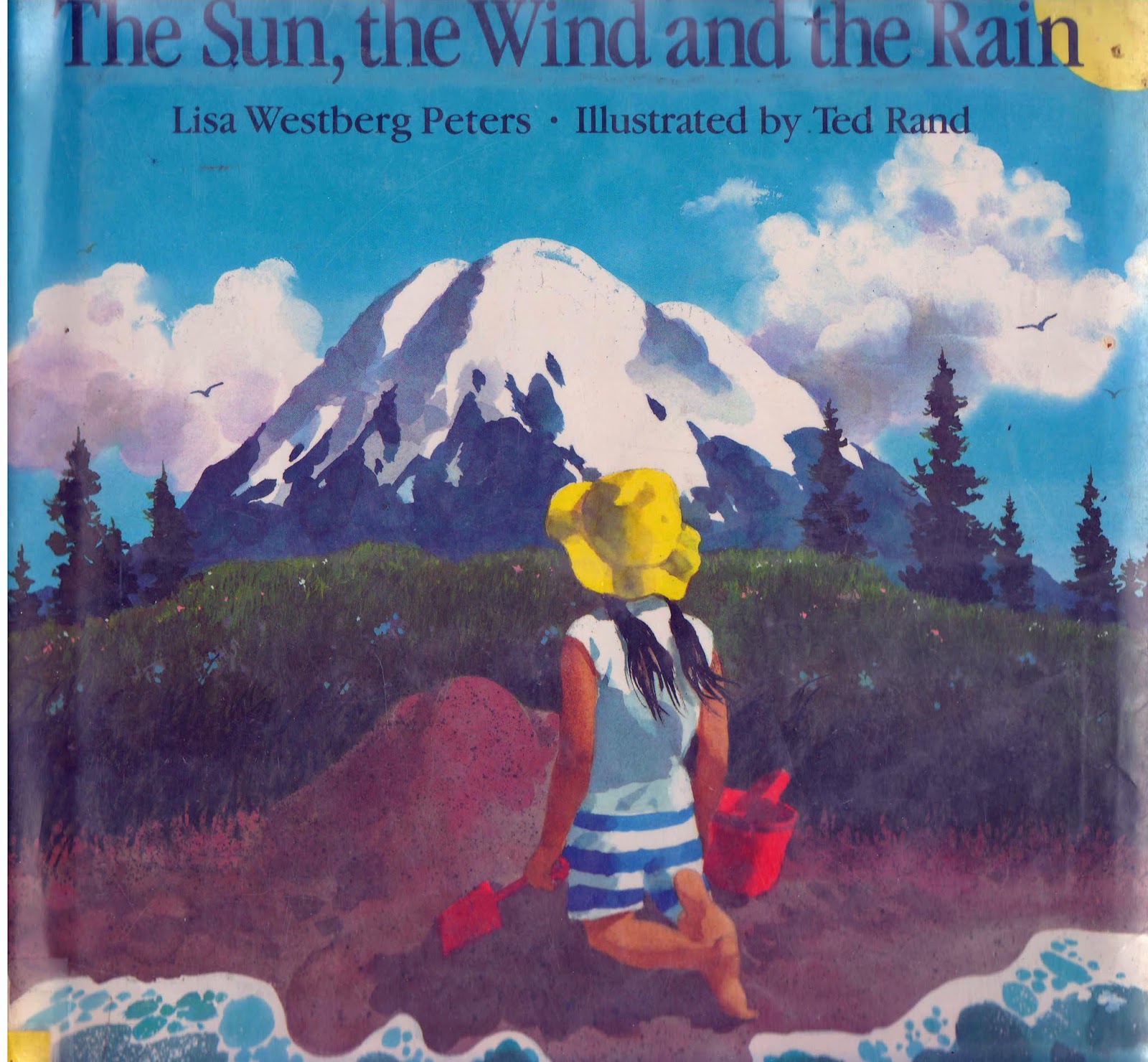
"The Sun, the Wind and the Rain" by Westberg Peters book review


"The Sun, the Wind and the Rain" by Westberg Peters is the story
of two mountains. One was made by the earth and the other by a little girl playing on the beach. The story of the first mountain is that of millions of years. It is the story of magma and the powers of the earth. The second mountain is that of sand made by a little girl and as permanent as any mound on the beach. 


This is a great story the shows the power of nature and the impermanence of humanity in the wake of it's majesty. 


Who should read this book? Everyone. 

Books read: 204 of 5000

Tuesday, September 11, 2018

Krakatoa: History's Loudest Volcano by Kathy Furgang


Volcanoes of the World, Krakatoa: History's Loudest Volcano by
Kathy Furgang is a book full of facts about the earth and Krakatoa. It's information is given in full color pictures illustrating the eruption that is so well known. 

Yeah, this is the book you want to get your child if they have a report to write. Still, it's a book that will teach children about the earth and one of the most awe inspiring forces of nature. 

Who should read this book? Everyone. 

Books read: 144 of 5000